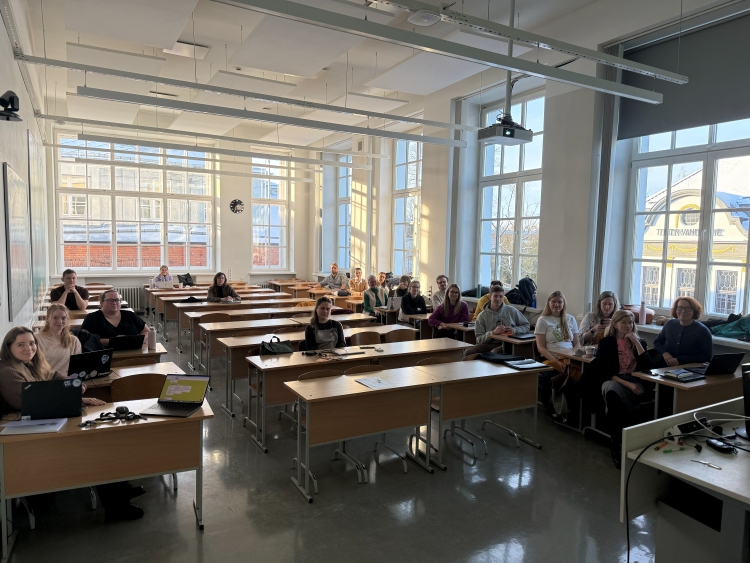
We have just closed the autumn semester! As part of the academic life, our lab members were actively involved in teaching at all study levels. Here, we’d like to bring out courses in which we interact with the students the most.
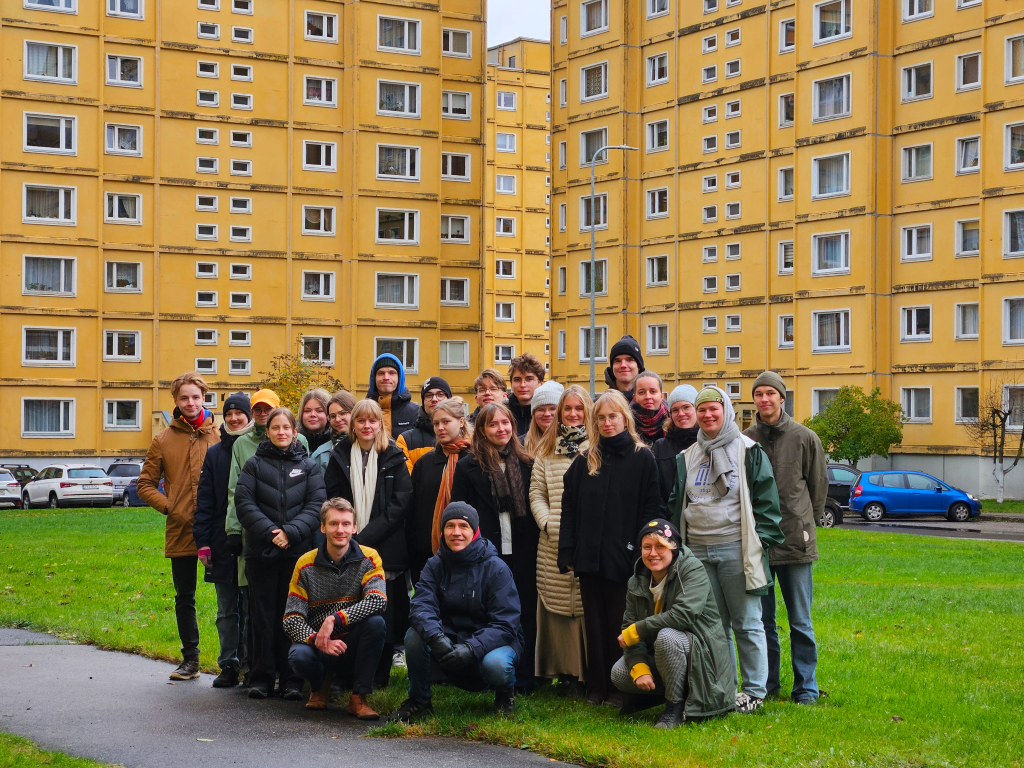
In the Fundamentals of Human Geography course, taught by Tiit Tammaru and Ago Tominga, first-year bachelor’s students were introduced to key historical and contemporary themes in human geography. They explored the evolvement of the field overtime, current research directions, methodological approaches to data collection and analysis, and ways how these insights inform spatial planning. The course concluded with an excursion around Tartu, demonstrating how theoretical concepts are reflected in real-world urban development.
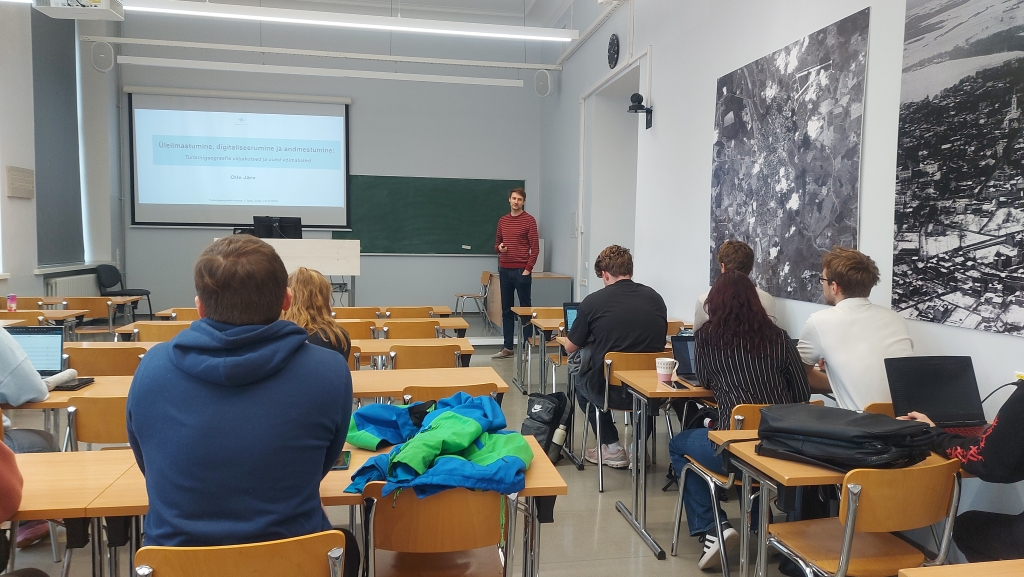
In the Tourism Geography course, Janika Raun introduced bachelor’s students to the diversity of tourism types and destinations. In addition to the regular curriculum, they had the opportunity to attend a guest lecture by our visiting professor Olle Järv, who discussed how digitalisation and big data influence the tourism sector and how the vast digital footprints created by people can be used to study tourism, tourists, and cross-border movements.
The Geography of Information and Communication Technologies and Mobile Positioning course, taught by Anto Aasa, provided bachelor’s students with a comprehensive overview of the global distribution of ICT and its societal impacts. The lectures covered the digital divide, mobile positioning methods, and the principles of location-based services, with particular emphasis on privacy risks and data protection. Throughout the course, they discussed ICT applications in tourism and research, as well as privacy risks and data protection. Students gained practical insights into how mobile positioning data is used in mobility studies and how ICT technologies influence people’s spatio-temporal behavior and society more broadly.
The Research Methods in Human Geography course, taught by Siiri Silm, Bianka Plüschke-Altof, Elina Maarja Suitso, Jaanika Jaanits, and Laura Altin, offered second-year students a solid foundation in human geographical research methods, enabling them to plan and conduct independent research for their Bachelor’s theses. The course was divided into two main blocks: quantitative and qualitative methods. Students completed a range of practical assignments, including working with Statistics Estonia public database, designing a questionnaire survey, analysing individual-level data, and conducting observations, interviews, and focus group interviews. Group projects explored diverse topics such as the seasonality of tourism in Tartu, students’ participation in cultural life, satisfaction with urban green spaces, students’ economic well-being, and mobility opportunities for people with mobility impairments in Tartu.
At the master’s level, the course Sustainable Urban Development under Global Change, taught by Age Poom, Triin Reitalu, Elise Jalonen, and Merle Karro-Kalberg, served as an excellent example of multidisciplinarity. This diversity was reflected in the course content, the students, and the teaching staff. While the lecturers came from backgrounds in human geography, ecology, landscape architecture, and environmental technology, the students were enrolled in Geography, Change Management in Society, or continuing education programmes. This year, group assignments addressed urban challenges at various spatial scales, including mobility transitions in suburban areas, community action for neighbourhood sustainability, restoration of riparian ecosystems in city centres, or reducing heat stress in extensive paved areas, among others.
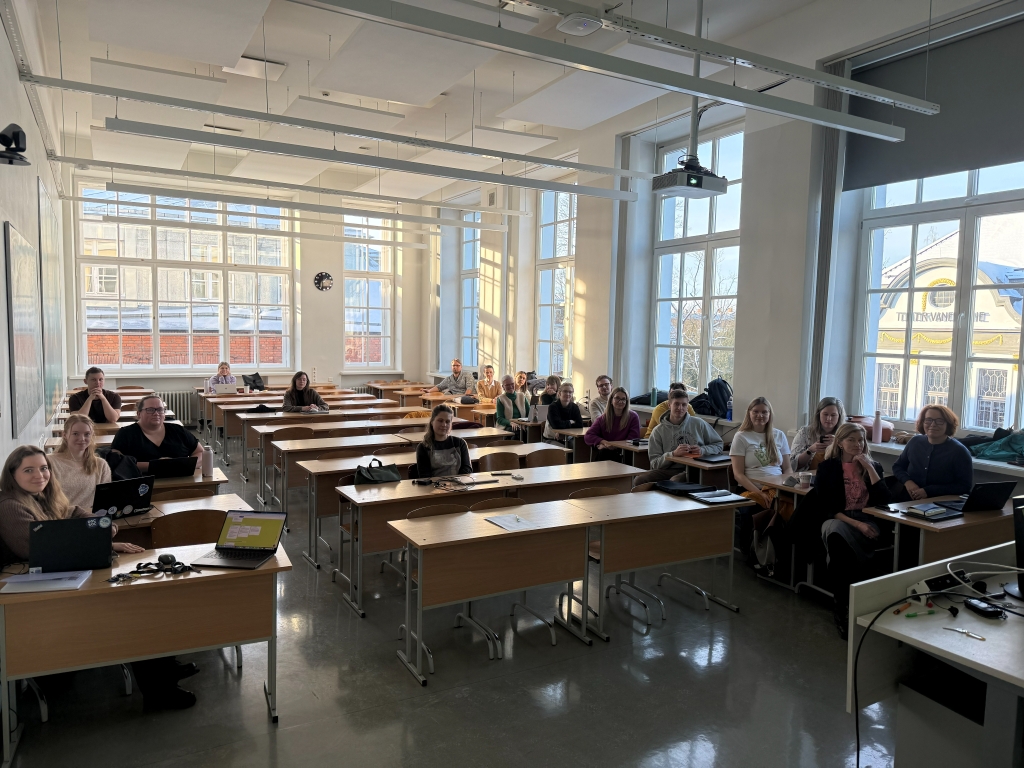
We are truly happy to contribute to students’ knowledge and skills from a wide range of perspectives and encourage them to explore and discuss various geography-related themes. During the upcoming spring semester, teaching remains an important part of our weekly rhythms. Moreover, we are more than glad to welcome again our visiting professors Frank Witlox, Jukka Krisp, and Matthew Zook!
The Mobility Lab of the University of Tartu is an interdisciplinary research group that studies human mobility and its associations with society and the environment using mobile (big) data.