The 2025/2026 academic year has come to an end, and we would like to take a moment to look back at our teaching activities. This post focuses on the spring semester, while the autumn semester is covered in our earlier post. This spring, our teaching ranged from mobile data and AI to green spaces and urban systems.
Under the leadership of Anto Aasa, together with Matthew Zook and Martin Haamer, students in the course Geography, Communication and Spatial Mobility explored how ICT reshapes spatial mobility, from mobile positioning data to AI and smart cities. Students analysed real mobile data to map visitor flows across Estonia.
Anto Aasa also contributed to the course Geospatial Analysis with Python and R, a hands-on introductory course on reproducible, script-based GIS. Anto led two R sessions, one on spatial interpolation and mobility (GPS and mobile positioning data) and one on crime data analysis. In 2026, these sessions were rebuilt around AI-assisted coding and the critical auditing of AI-generated code.

Age Poom, Martin, and Siiri Silm teach the Bachelor’s course Mobility and Transportation Geography, which lays the foundation of the discipline for further exploration of mobility issues in thesis work or graduate studies. In the Master’s course Mobility Analysis for Planning, the group assignment focused on the rail connectivity between Tallinn and Narva. As part of their work, students analysed Elron ticket sales data. For the fifth year in a row, the course also included the public online lecture series “Mobility Analysis and Planning for Human-Scale Cities”, which focused on public transport this year. All the lectures are available as recordings.

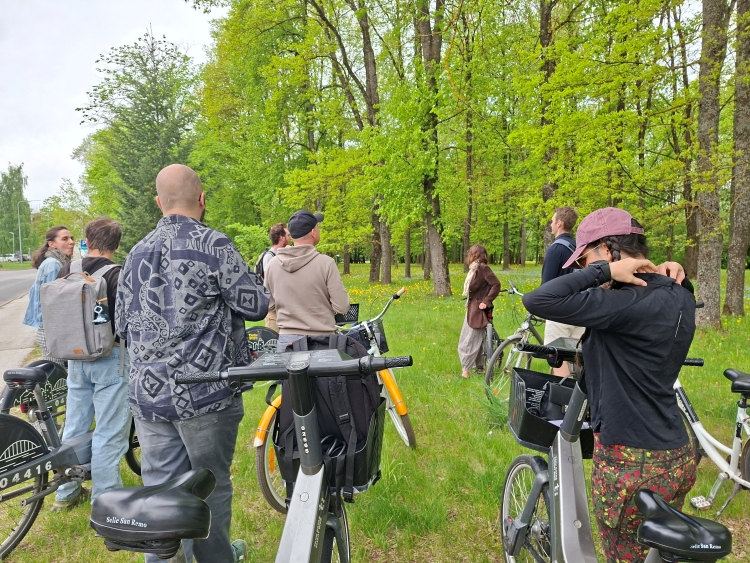
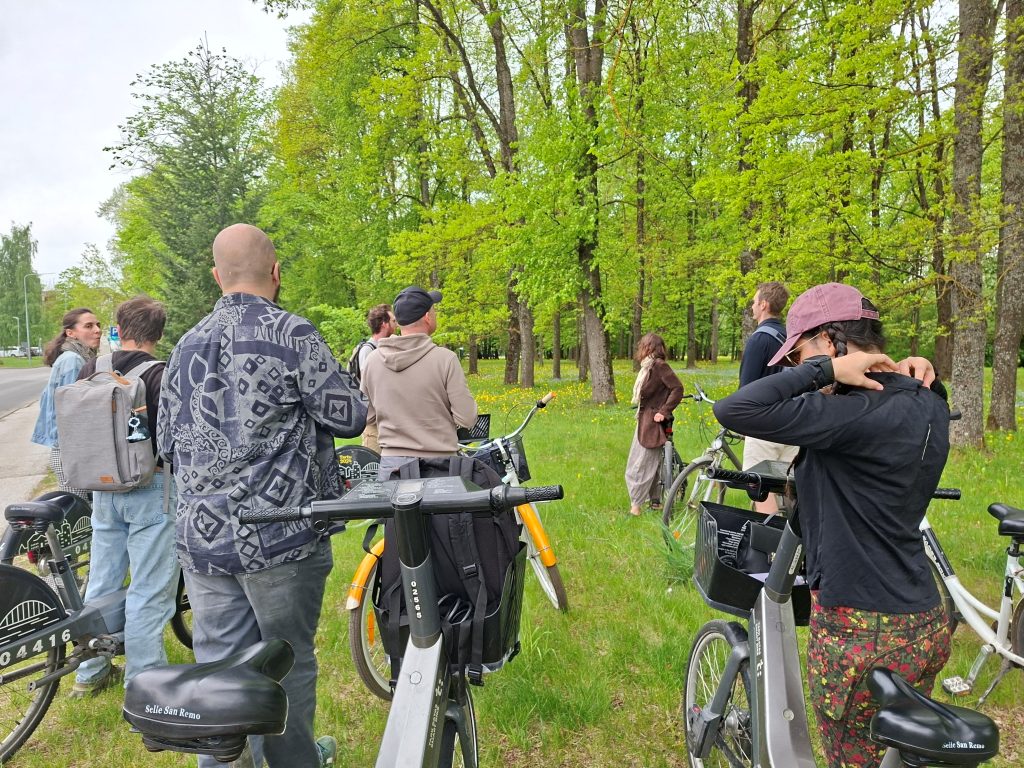
In Siiri Silm and Ago Tominga’s Planning Project course, the theme of this year’s group assignments was “Accessibility and Diversity of Green Areas in the Town of Tartu”. Students selected Karlova and Maarjamõisa as their study areas, and the projects focused on “Reconnecting Nature in Karlova’s Streetscape” and “Improving Multifunctionality in Maarjamõisa Green Spaces”.
Our visiting professors also taught their courses during the semester. Frank Witlox’s course Economic Geography of Urban Systems gives students an understanding of contemporary urban networks, including their role in economic processes, creativity, and the logistical challenges of cities. In a group assignment, students examine how companies make location decisions and why they choose particular places. This year, they looked into Full Accounting Services (FAS) Group in Georgia and Germany, and Taiwan Semiconductor Manufacturing Company Ltd. (TSMC) in Taiwan.
Jukka M. Krisp’s course Visual Geodata Mining deals with spatial and visual data mining techniques for multivariate datasets. After three intensive learning days, students understand the applications and methods behind visual data mining and learn to use the GeoDa and GeoViz tools themselves.
Spring is also, of course, a time for graduations, and we were happy to contribute by supervising students in their thesis work. Ago Tominga, Age Poom, Anto Aasa, Veronika Mooses, and Elise Jalonen supervised Bachelor’s theses by Neo Naatan Alakivi, Markus Karl Vallaste, and Kreete Kakk, as well as Master’s theses by Kumari Anuruddhika Mahawaththage and Kaur-Markus Mirka.
We are always pleased to see our students make their final efforts and successfully defend their theses. Congratulations to all graduates, and we wish everyone a pleasant summer break!
The Mobility Lab of the University of Tartu is an interdisciplinary research group that studies human mobility and its associations with society and the environment using mobile (big) data.